7 Signs Your Restaurant Has an Owner-Dependency Problem
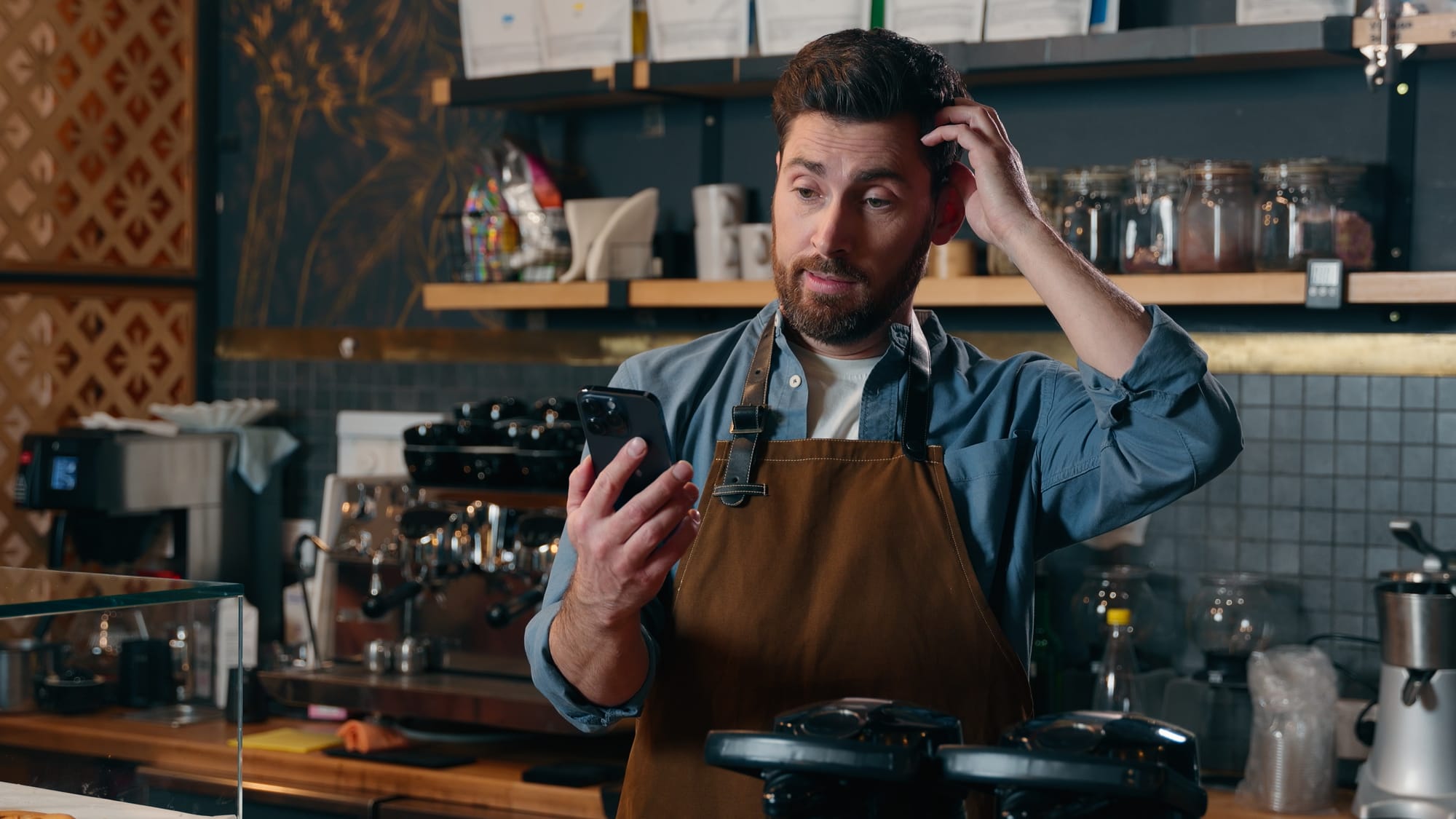
Your restaurant should work even when you're not there.
There is a phrase I've heard from restaurant owners many times over the years:
“Nobody does it the way I do.
”Sometimes they're right. The owner may know the customers better, understand the numbers better, notice problems faster, and care about the business more deeply than anyone else in the building. But there's a point where being indispensable stops being a strength. If the restaurant can't maintain its standards, control costs, handle employee issues, or make routine decisions without the owner being involved, the business has developed an owner-dependency problem. And that problem can quietly limit growth, exhaust the owner, weaken managers, and eventually affect profitability.
Here are seven signs it may be happening in your operation.
1. Everyone Calls You Instead of the Manager
An employee calls out. A customer complains. A vendor has a question. Someone wants to change the schedule. The POS isn't working correctly. And somehow, every road leads back to you. If employees routinely bypass managers and come directly to the owner, ask yourself why. Sometimes employees don't trust the manager's decisions. Sometimes the manager hasn't been given enough authority. And sometimes the owner has unintentionally trained everyone to believe that nothing is really decided until the owner decides it. That's not just a manager problem. It's a system problem.
2. Standards Change When You're Gone
You walk into the restaurant after being away and immediately notice things. The dining room isn't as clean. Portions aren't right. Prep wasn't completed. Ticket times have slipped. Uniform standards aren't being followed. Customer service feels different. If standards depend upon your physical presence, then those standards haven't actually become part of the operation. Strong systems create consistency regardless of who happens to be standing in the building.
3. Your Managers Bring You Problems Instead of Solutions
Managers should absolutely communicate problems upward. But there's an important difference between:
“Here's what's happening, here's what I think we should do, and here's why.”
and:
“What do you want me to do?”
If you're constantly answering the second question, your managers may never have learned how to exercise judgment. Effective management requires more than completing tasks. Managers need to assess situations, make decisions, communicate those decisions, accept accountability, and know when something genuinely needs to be escalated. That's a skill set. It has to be developed.
4. You Approve Decisions That Shouldn't Require You
Look at the decisions you make during an average week. How many truly require ownership?
Schedule adjustments?
Minor customer recoveries?
Routine purchasing?
Employee assignments?
Basic maintenance?
Shift decisions?
Vendor questions?
If you're personally approving dozens of routine operating decisions, you haven't necessarily maintained control. You may have created a bottleneck. The goal isn't to give managers unlimited authority. The goal is to create clear boundaries of authority and accountability so people understand what they can decide, what they can't decide, and when they need to involve you.
5. Taking a Real Vacation Feels Impossible
This may be the simplest test. Could you leave your restaurant for seven days without spending the entire trip checking your phone? Not whether you want to. Could you? Could your managers run the business, manage the team, maintain standards, control labor, resolve normal customer problems and communicate important information without you directing the operation remotely? If the answer is no, that's worth examining. An owner's presence should make the restaurant better. It shouldn't be the only thing holding the restaurant together.
6. Your Best Employees Keep Becoming Weak Managers
This happens constantly in restaurants. Someone is reliable, works hard, knows every station, rarely calls out and understands the operation. So we promote them. Congratulations. You're now a manager. And then we wonder why they struggle. Being an exceptional employee and managing other people are completely different jobs. New managers need to learn how to set expectations, delegate, coach, hold people accountable, communicate decisions, manage conflict, inspect standards and develop others. They also need to understand something we don't talk about enough:
Good leadership requires good followership.
Managers aren't always the highest authority in the organization. They have to know when to lead, when to follow, when to challenge appropriately, and how to execute a decision they may not personally have made. Developing that judgment creates stronger managers and healthier organizations.
7. Too Much of the Restaurant Exists Inside Your Head
Ask yourself:
What happens if you aren't available tomorrow?
Does your management team know your labor expectations?
Opening and closing standards?
Ordering procedures?
Food-cost expectations?
Customer recovery guidelines?
Maintenance routines?
Performance expectations?
Vendor contacts?
Critical weekly tasks?
Or do they know those things because you tell them when they need to know them?
When critical operating knowledge lives primarily inside the owner's head, the owner becomes part of the operating system. That's dangerous. Your knowledge needs to become organizational knowledge.
The Goal Isn't to Make the Owner Irrelevant
Owner independence doesn't mean disappearing from your restaurant. It means building an operation where your time can be spent leading the business instead of constantly rescuing it. And your organization should know how to function when you aren't standing there. There's a leadership principle I believe strongly in:
Lead when called. Follow with purpose.
Healthy restaurant organizations need both. Owners need managers capable of leading. Managers need employees capable of taking ownership and following effectively. And managers themselves need to understand when they're responsible for leading and when they're responsible for supporting the direction established above them. When those relationships work, accountability doesn't have to depend on one person constantly enforcing it.
Start by Finding the Real Problem
If your restaurant depends too heavily on you, don't immediately assume you need better employees. The real problem might be unclear expectations. It might be insufficient management training. It might be weak systems. It might be undefined authority. It might be inconsistent accountability. Or you may have unintentionally built an organization that has learned to depend on you.
Before fixing the problem, find out what's actually causing it.
Restaurant Operations Health Check
If you know something isn't working but you're too close to the operation to see exactly where it's breaking down, that's what the Pacific Northwest Foodservice Advisors Restaurant Operations Health Check is designed to uncover. I take an experienced outside look at leadership, labor, food cost, training, guest experience, kitchen execution, systems and accountability, financial controls, and owner dependency.
You receive clear findings, prioritized recommendations, a written Health Check Report, and a practical 30/60/90-day action plan. $1,500 flat fee.
No long-term contract.
No generic consulting binder.
Know what's working.
Find what's costing you.
Fix what matters first.
Ready for an outside set of eyes?
